| |
Date |
Event(s) |
| 1 | 1603 | - 24 Mar 1603—27 Mar 1625: King James I's reign
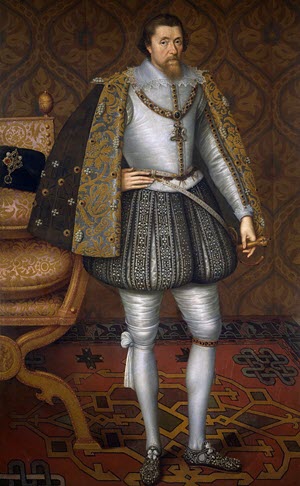
Elizabeth I was the last of Henry VIII's descendants, and James I was seen as her most likely heir through his great-grandmother Margaret Tudor, who was Henry VIII's oldest sister. From 1601, English politicians—notably her chief minister Sir Robert Cecil - maintained a secret correspondence with James to prepare in advance for a smooth succession. With the Queen clearly dying, Cecil sent James a draft proclamation of his accession to the English throne in March 1603. Elizabeth died in the early hours of 24 March, and James was proclaimed king in London later the same day.
On 5 April, James left Edinburgh for London, promising to return every three years (a promise that he did not keep), and progressed slowly southwards, arriving in the capital on 7 May, nine days after Elizabeth's funeral. His new subjects flocked to see him, relieved that the succession had triggered neither unrest nor invasion.
|
| 2 | 1620 | - 1620: The Pilgrim Fathers set sail
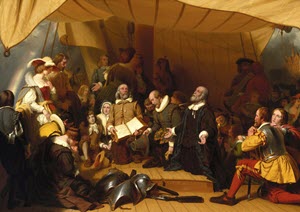
The Pilgrim Fathers set sail to the Americas on the Mayflower from Plymouth in Devon. Conventional wisdom is that the pilgrims fled England to escape religious persecution. The more realistic truth is that as a radical sect the pilgrims were unable to impose their views on the established church, and left voluntarily
- 1620: Plymouth Rock
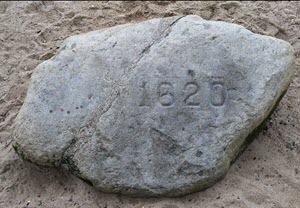
Plymouth Rock is the traditional disembarkation site of the Mayflower Pilgrims. More recently the idea has been questioned. Journalist Bill Bryson wrote, "The one thing the Pilgrims did not do was step ashore on Plymouth Rock," because the boulder would have made an impractical landing spot. Others have said the Pilgrims first disembarked from the Mayflower at Provincetown, Massachusetts
|
Webmaster Message
I make every effort to document my research. If you have something you would like to add, please contact me.



 1620 - 1620 (0 years)

