| |
Date |
Event(s) |
| 1 | 1908 | - 5 Apr 1908—5 Dec 1916: Herbert Henry Asquith - 52nd British Prime Minister
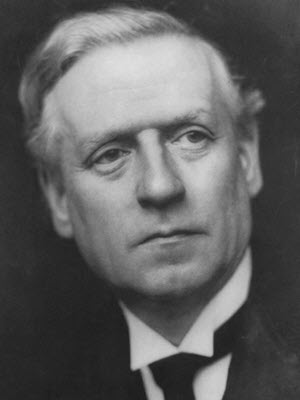
Herbert Henry Asquith, 1st Earl of Oxford and Asquith, (12 September 1852 – 15 February 1928), generally known as H. H. Asquith, was a British statesman and Liberal Party politician who served as Prime Minister of the United Kingdom from 1908 to 1916.
He was the last prime minister to lead a majority Liberal government. He played a central role in the design and passage of major liberal legislation and a reduction of the power of the House of Lords. In August 1914, Asquith took Great Britain and the British Empire into the First World War. In 1915 his government was vigorously attacked for the shortage of munitions and the failure at Gallipoli. He formed a coalition government with the other parties but failed to satisfy critics. He was forced to resign in December 1916 and never regained power.
|
| 2 | 1909 | - 4 Mar 1909—4 Mar 1913: William Howard Taft - 27th US President

William Howard Taft (September 15, 1857 – March 8, 1930) was the 27th president of the United States (1909–1913) and the tenth chief justice of the United States (1921–1930), the only person to have held both offices. Taft was elected president in 1908, the chosen successor of Theodore Roosevelt.
His administration was filled with conflict between the conservative wing of the Republican Party, with which Taft sympathized, and the progressive wing, toward which Roosevelt moved more and more. Controversies over conservation and antitrust cases filed by the Taft administration served to further separate the two men. Roosevelt challenged Taft for renomination in 1912. Taft used his control of the party machinery to gain a bare majority of delegates and Roosevelt bolted the party.
|
| 3 | 1910 | - 6 May 1910—20 Jan 1936: King George V's reign

George V's reign saw the rise of socialism, communism, fascism, Irish republicanism, and the Indian independence movement, all of which radically changed the political landscape. The Parliament Act 1911 established the supremacy of the elected British House of Commons over the unelected House of Lords. As a result of the First World War (1914–1918), the empires of his first cousins Tsar Nicholas II of Russia and Kaiser Wilhelm II of Germany fell, while the British Empire expanded to its greatest effective extent.
In 1917, George became the first monarch of the House of Windsor, which he renamed from the House of Saxe-Coburg and Gotha as a result of anti-German public sentiment. In 1924 he appointed the first Labour ministry and in 1931 the Statute of Westminster recognised the dominions of the Empire as separate, independent states within the Commonwealth of Nations.
|
| 4 | 1911 | - 10 Oct 1911—11 Oct 1917: Sir Robert Borden - 8th Canadian Prime Minister
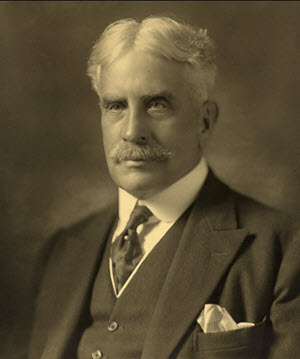
Sir Robert Laird Borden, (June 26, 1854 – June 10, 1937) was a Canadian lawyer and politician who served as the eighth prime minister of Canada, in office from 1911 to 1920. He is best known for his leadership of Canada during World War I. Borden was born in Grand-Pré, Nova Scotia.
He was elected to the House of Commons of Canada in 1896, representing the Conservative Party. He replaced Charles Tupper as party leader in 1901, and became prime minister after the party's victory at the 1911 federal election. As prime minister, Borden led Canada through World War I and its immediate aftermath. For the 1917 federal election (the first in six years), Borden created the Unionist Party, an amalgam of Conservatives and pro-conscription Liberals; his government was re-elected with an overwhelming majority.
|
| 5 | 1912 | - 15 Apr 1912: Sinking of theTitanic

RMS Titanic sank in the early morning of 15 Apr 1912, 4 days into its maiden voyage from Southampton to New York. The largest liner in service at the time, her sinking killed over 1,500 people, one of the deadliest peacetime maritime disasters in history. The disaster caused widespread outrage over the lack of lifeboats, lax regulations, and unequal treatment of the 3 passenger classes during evacuation
- 23 Jun 1912: Alan Turing born

Computers owe their existence to British mathematician, Alan Turing. A child prodigy, he went on to pursue his PhD at Princeton University. He was an important member of a group of code-breakers in the Government Code and Cypher School in Bletchley Park and was given the daunting task of deciphering the ever-changing German codes sent by Enigma. He and his team of code-breakers were successful. Despite his part in ensuring the defeat of Germany he was prosecuted for his homosexuality, and committed suicide. In 2009 the British government issued a public apology for the way he was treated and in 2013 he was posthumously pardoned.
|
Webmaster Message
I make every effort to document my research. If you have something you would like to add, please contact me.



 1912 - 1912 (0 years)

