| |
Date |
Event(s) |
| 1 | 1689 | - 13 Feb 1689—8 Mar 1702: King William III's reign

William III, supported by a group of influential British political and religious leaders, invaded England in what became known as the "Glorious Revolution," landing at the southern English port of Brixham. James was deposed and William and his wife became joint sovereigns. William and Mary reigned together until Mary's death on 28 December 1694, after which William ruled as sole monarch.
William's reputation as a staunch Protestant enabled him to take power in Britain when many were fearful of a revival of Catholicism. Hiss victory at the Battle of the Boyne in 1690 is still commemorated by loyalists in Northern Ireland and Scotland. His reign marked the beginning of the transition from the personal rule of the Stuarts to a more Parliament-centred rule
- 13 Feb 1689—28 Dec 1694: Queen Mary II's reign

Mary II (30 April 1662 – 28 December 1694) was Queen of England, Scotland, and Ireland, reigning with her husband, King William III of England and Ireland, and King William II of Scotland. William and Mary, both Protestants, became king and queen after the Glorious Revolution, which resulted in the adoption of the English Bill of Rights and the deposition of her Roman Catholic father, James II and VII. William became sole ruler upon her death in 1694.
Mary wielded less power than William when he was in England, ceding most of her authority to him, though he heavily relied on her. She acted alone when William was engaged in military campaigns abroad, proving herself to be a powerful, firm, and effective ruler.
|
| 2 | 1692 | - Feb 1692—May 1693: Salem witch trials

The Salem witch trials were a series of hearings and prosecutions of people accused of witchcraft in colonial Massachusetts between February 1692 and May 1693. More than 200 people were accused. Thirty people were found guilty, 19 of whom were executed by hanging (14 women and five men). One other man, Giles Corey, was pressed to death after refusing to enter a plea, and at least five people died in jail.
The episode is one of Colonial America's most notorious cases of mass hysteria. It has been used in political rhetoric and popular literature as a vivid cautionary tale about the dangers of isolation, religious extremism, false accusations, and lapses in due process. It was not unique, but a Colonial American example of the much broader phenomenon of witch trials in the early modern period, which took place also in Europe. Many historians consider the lasting effects of the trials to have been highly influential in the history of the United States. According to historian George Lincoln Burr, "the Salem witchcraft was the rock on which the theocracy shattered."
|
| 3 | 1702 | - 8 Mar 1702—1 Aug 1714: Queen Anne's reign

Queen Anne, the second daughter of James II, Anne was a staunch, high church Protestant. During her reign Britain became a major military power and the foundations were laid for the 18th century’s Golden Age.
Anne was plagued by ill health throughout her life, and from her thirties, she grew increasingly ill and obese. Despite seventeen pregnancies by her husband, Prince George of Denmark, she died without surviving issue and was the last monarch of the House of Stuart. Under the Act of Settlement 1701, which excluded all Catholics, she was succeeded by her second cousin George I of the House of Hanover.
|
| 4 | 1704 | - 4 Aug 1704: Gibraltar captured
 Anglo-Dutch forces captured Gibraltar from Spain during the War of the Spanish Succession on behalf of the Habsburg claim to the Spanish throne. The territory was ceded to Great Britain in perpetuity under the Treaty of Utrecht in 1713. During World War II it was an important base for the Royal Navy as it controlled the entrance and exit to the Mediterranean Sea, which is only 8 miles wide at this naval choke point.
The sovereignty of Gibraltar is a point of contention in Anglo-Spanish relations because Spain asserts a claim to the territory. Gibraltarians rejected proposals for Spanish sovereignty in a 1967 referendum and, in a 2002 referendum, the idea of shared sovereignty was also rejected.
|
| 5 | 1707 | - 16 Jan 1707: Kingdom of Great Britain founded
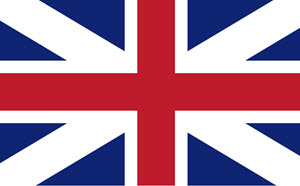
Union of England and Scotland. With its economy almost bankrupted following the collapse of the Darien Scheme, a poorly attended Scottish Parliament voted to agree the Union on 16 January
The early years of the unified kingdom were marked by Jacobite risings which ended in defeat for the Stuart cause at Culloden in 1746. In 1763, victory in the Seven Years' War led to the dominance of the British Empire, which was to become the foremost global power for over a century and slowly grew to become the largest empire in history. The Kingdom of Great Britain was replaced by the United Kingdom of Great Britain and Ireland on 1 January 1801 with the Acts of Union 1800
|
| 6 | 1709 | - 1709: Iron making

Coalbrookdale is a village in the Ironbridge Gorge in Shropshire, England, containing a settlement of great significance in the history of iron ore smelting.
This is where iron ore was first smelted by Abraham Darby using easily mined "coking coal". The coal was drawn from drift mines in the sides of the valley. As it contained far fewer impurities than normal coal, the iron it produced was of a superior quality. Along with many other industrial developments that were going on in other parts of the country, this discovery was a major factor in the growing industrialisation of Britain, which was to become known as the Industrial Revolution.
|
| 7 | 1714 | - 1 Aug 1714—11 Jun 1727: King George I's reign
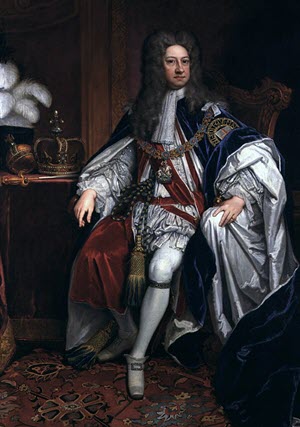
George I ascended the British throne as the first monarch of the House of Hanover. Although over 50 Roman Catholics were closer to his predecessor, Anne by primogeniture, the Act of Settlement 1701 prohibited Catholics from inheriting the British throne; George was Anne's closest living Protestant relative. In reaction, Jacobites attempted to depose George and replace him with Anne's Catholic half-brother, James Francis Edward Stuart, but their attempts failed.
During his reign, the powers of the monarchy diminished and Britain began a transition to the modern system of cabinet government led by a prime minister. Towards the end of his reign, actual political power was held by Robert Walpole, now recognised as Britain's first de facto prime minister. George died of a stroke on a trip to his native Hanover, where he was buried - the last British monarch to be buried outside the UK.
|
| 8 | 1718 | - 1718: Transportation of Convicts Begins

The Transportation Act 1717 introduced penal transportation. People convicted of capital crimes had their sentences commuted to 14 years or life in the Americas. Convicts found guilty of non-capital crimes received seven-year sentences. Between 1718 and 1776, over 50,000 convicts were transported to Virginia and Maryland in the modern United States. The American Revolution made further transportation impossible.
|
Webmaster Message
I make every effort to document my research. If you have something you would like to add, please contact me.



 1693 - 1719 (25 years)

