| |
Date |
Event(s) |
| 1 | 1896 | - 23 Jun 1896—6 Oct 1911: Sir Wilfred Laurier- 7th Canadian Prime Minister
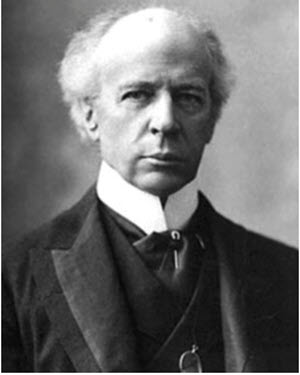
In the federal election, the Liberals defeated the Conservatives with 118 seats to 88. Wilfrid Laurier became Canada's first French-Canadian prime minister and marked a turning point in Canadian politics after years of Conservative Party rule.
Text and image © The Canadian Encyclopedia
|
| 2 | 1901 | - 22 Jan 1901—6 May 1910: King Edward VII's reign

Edward VII was King of the United Kingdom of Great Britain and Ireland and Emperor of India from 22 January 1901 until his death in 1910.
The eldest son of Queen Victoria and Prince Albert, Edward was related to royalty throughout Europe. During his mother's long reign he was excluded from political power, and personified the fashionable, leisured elite. Despite public approval his reputation as a playboy prince soured his relationship with his mother.
As king, Edward fostered good relations between Britain and other European countries, especially France, for which he was popularly called "Peacemaker", but his relationship with his nephew, the German Emperor Wilhelm II, was poor. The Edwardian era, which covered Edward's reign and was named after him, coincided with the start of a new century and heralded significant changes in technology and society, including steam turbine propulsion and the rise of socialism
- 14 Sep 1901—4 Mar 1909: Theodore Roosevelt - 26th US President

Theodore Roosevelt Jr. (October 27, 1858 – January 6, 1919) was an American statesman and writer who served as the 26th president of the United States from 1901 to 1909. He also served as the 25th vice president of the United States from March to September 1901 and as the 33rd governor of New York from 1899 to 1900.
He became President at age 42 following McKinley's assassination that September, and remains the youngest person to become President of the United States. As a leader of the Republican Party during this time, he became a driving force for the Progressive Era in the United States in the early 20th century. His face is depicted on Mount Rushmore, alongside those of George Washington, Thomas Jefferson, and Abraham Lincoln. In polls of historians and political scientists, Roosevelt is generally ranked as one of the five best presidents.
|
| 3 | 1902 | - 12 Jul 1902—4 Dec 1905: Arthur Balfour - 50th British Prime Minister

Arthur James Balfour, 1st Earl of Balfour, (25 July 1848 – 19 March 1930) was a British statesman and Conservative Party politician who served as Prime Minister of the United Kingdom from 1902 to 1905.
He oversaw reform of British defence policy and secured the Entente Cordiale with France, leaving Germany in the cold. Resignations from the Cabinet over tariffs left his party divided. He also suffered from public anger at the later stages of the Boer war and the importation of Chinese labour to South Africa.
|
Webmaster Message
I make every effort to document my research. If you have something you would like to add, please contact me.



 1903 - 1903 (0 years)

