| |
Date |
Event(s) |
| 1 | 1837 | - 20 Jun 1837—22 Jan 1901: Queen Victoria's reign

Victoria was Queen of the United Kingdom of Great Britain and Ireland from 20 June 1837 until her death. On 1 May 1876, she adopted the additional title of Empress of India.
Victoria inherited the throne at the age of 18, after her father's three elder brothers had all died leaving no surviving legitimate children. She became a national icon who was identified with strict standards of personal morality. Victoria married her first cousin Prince Albert. After his death in 1861, Victoria plunged into deep mourning and avoided public appearances. As a result, republicanism temporarily gained strength but in the latter half of her reign, her popularity recovered. Her Golden and Diamond Jubilees were times of public celebration.
|
| 2 | 1855 | - 6 Feb 1855—19 Feb 1858: Viscount Palmerston - 35th British Prime Minister

Henry John Temple, 3rd Viscount Palmerston, (20 October 1784 – 18 October 1865) was a British statesman who served twice as Prime Minister in the mid-19th century. Palmerston dominated British foreign policy during the period 1830 to 1865, when Britain was at the height of her imperial power. He held office almost continuously from 1807 until his death in 1865. He began his parliamentary career as a Tory, defected to the Whigs in 1830, and became the first Prime Minister of the newly formed Liberal Party in 1859.
He had two periods in office, 1855–1858 and 1859–1865, before his death at the age of 80 years, a few months subsequent to victory in a general election in which he had achieved an increased majority. He remains, to date, the last Prime Minister to die in office.
|
| 3 | 1857 | - 4 Mar 1857—4 Mar 1861: James Buchanan - 15th US President

James Buchanan Jr. (April 23, 1791 – June 1, 1868) was an American politician who served as the 15th president of the United States (1857–1861), serving immediately prior to the American Civil War.
A member of the Democratic Party, he was the 17th United States secretary of state and had served in the Senate and House of Representatives before becoming president.
|
| 4 | 1858 | - 20 Feb 1858—11 Jun 1859: Earl of Derby - 36th British Prime Minister

Edward George Geoffrey Smith-Stanley, 14th Earl of Derby, (29 March 1799 – 23 October 1869) was a British statesman, three-time Prime Minister of the United Kingdom and, to date, the longest-serving leader of the Conservative Party. He was known before 1834 as Edward Stanley, and from 1834 to 1851 as Lord Stanley. He is one of only four British prime ministers to have three or more separate periods in office. However, his ministries all lasted less than two years and totalled three years and 280 days.
Among the notable achievements of this, his second administration, was the end of the British East India Company following the Sepoy Mutiny, which brought India under direct British control for the first time. Once again the government was short-lived, resigning after only one year, having narrowly lost a vote of no-confidence
- 25 Apr 1858: Fraser River Gold Rush

The first wave of miners from California arrived at Victoria, en route to the Fraser River Gold Rush. The Gold Rush caused a precipitous decline in the Native population and politically unified British Columbia.
Text and image © The Canadian Encyclopedia
|
| 5 | 1859 | - 1859: Sir Arthur Conan Doyle born

Sir Arthur Conan Doyle was Scottish author who created the legendary character, 'Sherlock Holmes.' He wrote over 60 'Sherlock Holmes' stories and many non-fiction, works of fantasy, science-fiction, poetry and historical novels. He went to medical school and set up his own practice. His medical career did not succeed and he began writing while he waited for patients. The rest is history.
- 12 Jun 1859—18 Oct 1865: Viscount Palmerston - 37th British Prime Minister
Henry John Temple, 3rd Viscount Palmerston, (20 October 1784 – 18 October 1865) was a British statesman who served twice as Prime Minister in the mid-19th century. Palmerston dominated British foreign policy during the period 1830 to 1865, when Britain was at the height of her imperial power. He held office almost continuously from 1807 until his death in 1865. He began his parliamentary career as a Tory, defected to the Whigs in 1830, and became the first Prime Minister of the newly formed Liberal Party in 1859.
He had two periods in office, 1855–1858 and 1859–1865, before his death at the age of 80 years, a few months subsequent to victory in a general election in which he had achieved an increased majority. He remains, to date, the last Prime Minister to die in office.
- 24 Nov 1859: On the Origin of Species published

On the Origin of Species (or more completely, On the Origin of Species by Means of Natural Selection, or the Preservation of Favoured Races in the Struggle for Life), published on 24 November 1859, is a work of scientific literature by Charles Darwin which is considered to be the foundation of evolutionary biology. Darwin's book introduced the scientific theory that populations evolve over the course of generations through a process of natural selection. It presented a body of evidence that the diversity of life arose by common descent through a branching pattern of evolution. Darwin included evidence that he had gathered on the Beagle expedition in the 1830s and his subsequent findings from research, correspondence, and experimentation.
|
| 6 | 1861 | - 4 Mar 1861—15 Apr 1865: Abraham Lincoln - 16th US President

Abraham Lincoln (February 12, 1809 – April 15, 1865) was an American lawyer and politician who served as the 16th president of the United States from 1861 until his assassination in April 1865.
Lincoln led the nation through the Civil War, its bloodiest war and its greatest moral, constitutional, and political crisis. In doing so, he preserved the Union, abolished slavery, strengthened the federal government, and modernized the economy.
- 12 Apr 1861—9 May 1865: American Civil War

The American Civil War was fought in the United States from 1861 to 1865. The Civil War is the most studied and written about episode in U.S. history. Primarily as a result of the long-standing controversy over the enslavement of black people, war broke out in April 1861 when secessionist forces attacked Fort Sumter in South Carolina shortly after Abraham Lincoln had been inaugurated as the President of the United States. The loyalists of the Union in the North proclaimed support for the Constitution. They faced secessionists of the Confederate States in the South, who advocated for states' rights to uphold slavery.
The war ended when General Robert E. Lee surrendered to General Ulysses S. Grant at the Battle of Appomattox Court House. Confederate generals throughout the southern states followed suit. Much of the South's infrastructure was destroyed, especially the transportation systems. The Confederacy collapsed, slavery was abolished, and four million black slaves were freed. During the Reconstruction Era that followed the war, national unity was slowly restored, the national government expanded its power, and civil rights were guaranteed to freed black slaves through amendments to the Constitution and federal legislation.
|
| 7 | 1863 | - 1863: First Underground Railways

The history of the London Underground began with the construction of the Metropolitan Railway, the world's first underground railway which opened in 1863 using gas-lit wooden carriages hauled by steam locomotives. The Metropolitan eventually extended more than 50 miles from Baker Street, London. By 1907 the District and Metropolitan Railways had electrified the underground sections of their lines.
|
| 8 | 1864 | - 1 Aug 1864: Charlottetown Conference

The Charlottetown Conference was held in Charlottetown, PEI. At the conference Maritime union was virtually dropped, and the delegates agreed to meet a new conference in Québec to discuss a Canadian scheme for a union of all the colonies.
Text and image © The Canadian Encyclopedia
|
| 9 | 1865 | - 15 Apr 1865—4 Mar 1869: Andrew Johnson - 17th US President

Andrew Johnson (December 29, 1808 – July 31, 1875) was the 17th president of the United States, serving from 1865 to 1869. Johnson assumed the presidency as he was vice president of the United States at the time of the assassination of Abraham Lincoln.
A Democrat who ran with Lincoln on the National Union ticket, Johnson came to office as the Civil War concluded. He favored quick restoration of the seceded states to the Union. His plans did not give protection to the former slaves; he came into conflict with the Republican-dominated Congress, culminating in his impeachment by the House of Representatives. He was acquitted in the Senate by one vote.
- 29 Oct 1865—26 Jun 1866: John Russell - 38th British Prime Minister

John Russell, 1st Earl Russell, (18 August 1792 – 28 May 1878), known by his courtesy title Lord John Russell before 1861, was a leading Whig and Liberal politician who served as Prime Minister of the United Kingdom on two occasions during the early Victorian era.
When Palmerston suddenly died in late 1865, Russell again became Prime Minister. His second premiership was short and frustrating, and Russell failed in his great ambition of expanding the franchise, a task that would be left to his Conservative successors, Derby and Benjamin Disraeli. In 1866, party disunity again brought down his government.
|
| 10 | 1866 | - 28 Jun 1866—25 Feb 1868: Earl of Derby - 39th British Prime Minister
Edward George Geoffrey Smith-Stanley, 14th Earl of Derby, (29 March 1799 – 23 October 1869) was a British statesman, three-time Prime Minister of the United Kingdom and, to date, the longest-serving leader of the Conservative Party. He was known before 1834 as Edward Stanley, and from 1834 to 1851 as Lord Stanley. He is one of only four British prime ministers to have three or more separate periods in office. However, his ministries all lasted less than two years and totalled three years and 280 days.
Derby returned to power for the third and last time in 1866. This administration was particularly notable for the passage of the Reform Act 1867, which greatly expanded the suffrage but which provoked the resignation of three cabinet ministers including the Secretary for India and three-time future Prime Minister, Lord Cranborne (later Lord Salisbury).
|
| 11 | 1867 | - 8 Mar 1867: British North America Act
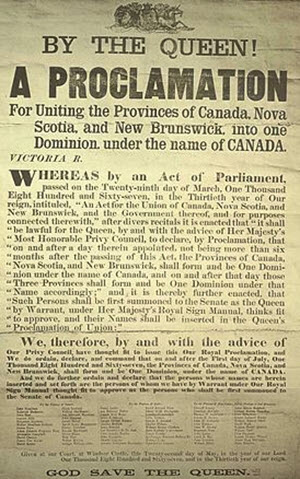
The British North America Act was passed by the British Parliament and given royal assent by Queen Victoria on 29 March. It came into effect on 1 July. The Act joined the colonies of Canada, Nova Scotia and New Brunswick in one federal union.
Text and image © The Canadian Encyclopedia
- 1 Jul 1867—5 Nov 1873: Sir John A. Macdonald - 1st Canadian Prime Minister

Sir John Alexander Macdonald (11 January 1815 – 6 June 1891) was the first prime minister of Canada (1867–1873, 1878–1891). The dominant figure of Canadian Confederation, he had a political career which spanned almost half a century. Macdonald was born in Scotland; when he was a boy his family immigrated to Kingston in the Province of Upper Canada (today in eastern Ontario).
In 1864, when no party proved capable of governing for long, Macdonald agreed to a proposal from his political rival, George Brown, that the parties unite in a Great Coalition to seek federation and political reform. Macdonald was the leading figure in the subsequent discussions and conferences, which resulted in the British North America Act and the birth of Canada as a nation on 1 July 1867. Macdonald was the first Prime Minister of the new nation, and served 19 years; only William Lyon Mackenzie King served longer.
- 7 Nov 1867: Marie Curie Born

Marie Skłodowska Curie; born Maria Salomea Skłodowska 7 November 1867 – 4 July 1934) was a Polish and naturalized-French physicist and chemist who conducted pioneering research on radioactivity. She was the first woman to win a Nobel Prize, the first person and only woman to win twice, and the only person to win a Nobel Prize in two different sciences. She was part of the Curie family legacy of five Nobel Prizes. She was also the first woman to become a professor at the University of Paris, and in 1995 became the first woman to be entombed on her own merits in the Panthéon in Paris.
She was born in Warsaw, in what was then the Kingdom of Poland, part of the Russian Empire. She studied at Warsaw's clandestine Flying University and began her practical scientific training in Warsaw. In 1891, aged 24, she followed her older sister Bronisława to study in Paris, where she earned her higher degrees and conducted her subsequent scientific work. She shared the 1903 Nobel Prize in Physics with her husband Pierre Curie and physicist Henri Becquerel. She won the 1911 Nobel Prize in Chemistry.
|
| 12 | 1868 | - 27 Feb 1868—1 Dec 1868: Benjamin Disraeli - 40th British Prime Minister

Benjamin Disraeli, 1st Earl of Beaconsfield, (21 December 1804 – 19 April 1881) was a British statesman who twice served as Prime Minister of the United Kingdom.
During his first term of office, the Conservatives remained a minority in the House of Commons and the passage of the Reform Bill required the calling of a new election once the new voting register had been compiled. Disraeli's term as Prime Minister, which began in February 1868, would therefore be short.
- 3 Dec 1868—17 Feb 1874: William Ewart Gladstone - 41st British Prime Minister

William Ewart Gladstone (29 December 1809 – 19 May 1898) was a British statesman and Liberal Party politician. In a career lasting over sixty years, he served for twelve years as Prime Minister of the United Kingdom, spread over four terms beginning in 1868 and ending in 1894.
Many reforms were passed during his first ministry, including the disestablishment of the Church of Ireland and the introduction of secret voting. After electoral defeat in 1874, Gladstone resigned as leader of the Liberal Party.
|
| 13 | 1869 | - 4 Mar 1869—4 Mar 1877: Ulysses S Grant - 18th US President

Ulysses S Grant (born Hiram Ulysses Grant;[b] April 27, 1822 – July 23, 1885) was the 18th president of the United States from 1869 to 1877, commanding general of the Army, soldier, international statesman, and author.
Elected the youngest 19th Century president in 1868, Grant stabilized the post-war national economy, created the Department of Justice, and prosecuted the Ku Klux Klan. He appointed African-Americans and Jewish-Americans to prominent federal offices. In 1871, Grant created the first Civil Service Commission. The Democrats and Liberal Republicans united behind Grant's opponent in the presidential election of 1872, but Grant was handily re-elected. Grant's new Peace Policy for Native Americans had both successes and failures.
- 2 Nov 1869: Red River Resistance
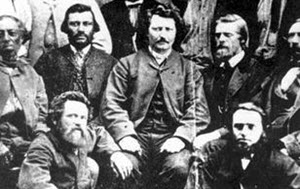
With 120 men, Louis Riel occupied Fort Garry in the Red River Colony to block the transfer of the Northwest from the Hudson's Bay Company to Canada. The resistance resulted in the formation of the new province of Manitoba but Riel was exiled.
Text and image © The Canadian Encyclopedia
|
| 14 | 1870 | - 1870: Education Act

The 1870 Education Act stands as the very first piece of legislation to deal specifically with the provision of education in Britain. Most importantly, it demonstrated a commitment to provision on a national scale.
The Act allowed voluntary schools to carry on unchanged, but established a system of 'school boards' to build and manage schools in areas where they were needed. The boards were locally elected bodies which drew their funding from the local rates. Unlike the voluntary schools, religious teaching in the board schools was to be 'non-denominational'. A separate Act extended similar provisions to Scotland in 1872.
|
| 15 | 1871 | - 1871: Ernest Rutherford born
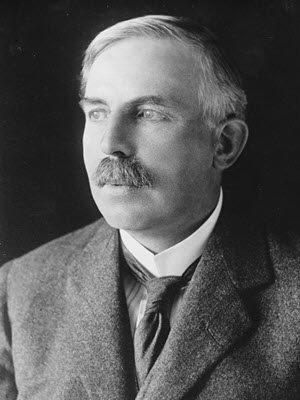
Ernest Rutherford was a New Zealand physicist known as the father of nuclear physics.
He received the Nobel Prize in Chemistry in 1908 “for his investigations into the disintegration of the elements & the chemistry of radioactive substances.” He identified & named the Alpha & Beta
- 8 Apr 1871: Treaty of Washington

The Treaty of Washington granted Americans fishing rights in Canadian waters and the use of Canadian canals and the St Lawrence River. Canadians were allowed to navigate Lake Michigan, the St Clair Flats Canal and Alaskan rivers.
Text © The Canadian Encyclopedia<
- 3 Aug 1871: Treaty Number 1

The Numbered Treaties were a series of 11 treaties made between the Crown and Indigenous peoples of Canada from 1871 to 1921. They cover the area between the Lake of the Woods (northern Ontario, southern Manitoba) to the Rocky Mountains (northeastern British Columbia and interior Plains of Alberta) to the Beaufort Sea (north of Yukon and the Northwest Territories).
Treaty No. 1: The first post-Confederation treaty was signed at Lower Fort Garry, Man. The first of many “Numbered Treaties,” Treaty No. 1 was signed between the Crown and the Ojibwa and Swampy Cree Nations. The treaty included the provision of livestock, agricultural equipment and the establishment of schools in exchange for ceding large tracts of Aboriginal hunting grounds.
Text and image © The Canadian Encyclopedia
- 21 Aug 1871: Treaty Number 2

The Numbered Treaties were a series of 11 treaties made between the Crown and Indigenous peoples of Canada from 1871 to 1921. They cover the area between the Lake of the Woods (northern Ontario, southern Manitoba) to the Rocky Mountains (northeastern British Columbia and interior Plains of Alberta) to the Beaufort Sea (north of Yukon and the Northwest Territories).
Treaty No. 2 was concluded with Chippewa of Manitoba, who ceded land from the mouth of Winnipeg River to the northern shores of Lake Manitoba across the Assiniboine River to the United States frontier.
Text and image © The Canadian Encyclopedia
|
| 16 | 1873 | - 3 Oct 1873: Treaty Number 3
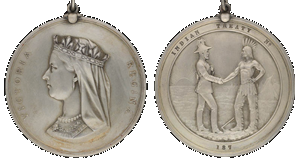
The Numbered Treaties were a series of 11 treaties made between the Crown and Indigenous peoples of Canada from 1871 to 1921. They cover the area between the Lake of the Woods (northern Ontario, southern Manitoba) to the Rocky Mountains (northeastern British Columbia and interior Plains of Alberta) to the Beaufort Sea (north of Yukon and the Northwest Territories).
Treaty No. 3 was signed by the Saulteaux (Chippewa) of northwestern Ontario and of Manitoba. For the surrender of a tract comprising about 55,000 sq. miles, the Dominion Government reserved not more than one square mile for each family of five and agreed to pay $12 per head and an annuity of $5 per head.
Text and image © The Canadian Encyclopedia
- 7 Nov 1873—8 Oct 1878: Alexander Mackenzie - 2nd Canadian Prime Minister

Alexander Mackenzie (January 28, 1822 – April 17, 1892), was a Scottish-Canadian politician who served as the second prime minister of Canada, in office from 1873 to 1878. Mackenzie was born in Logierait, Perthshire, Scotland and emigrated to Canada when he was 19, settling in what became Ontario.
In 1867, Mackenzie was elected to the new House of Commons of Canada for the Liberal Party. He became leader of the party (and thus Leader of the Opposition) in mid-1873, and a few months later succeeded John A. Macdonald as prime minister, following Macdonald's resignation in the aftermath of the Pacific Scandal. Mackenzie and the Liberals won a clear majority at the 1874 election.
As prime minister, Mackenzie continued the nation-building programme that had been begun by his predecessor. His government established the Supreme Court of Canada and Royal Military College of Canada, and created the District of Keewatin to better administer Canada's newly acquired western territories. At the 1878 election, Mackenzie's government suffered a landslide defeat.
|
| 17 | 1874 | - 20 Feb 1874—21 Apr 1880: Benjamin Disraeli - 42nd British Prime Minister
Benjamin Disraeli, 1st Earl of Beaconsfield, (21 December 1804 – 19 April 1881) was a British statesman who twice served as Prime Minister of the United Kingdom.
Disraeli's new government enacted many reforms, including:
- the Artisans' and Labourers' Dwellings Improvement Act 1875, which made inexpensive loans available to towns and cities to construct working-class housing.
- the Public Health Act 1875, modernising sanitary codes through the nation,
- the Sale of Food and Drugs Act (1875)
- the Education Act (1876).
- the Factory Act meant to protect workers,
- the Conspiracy, and Protection of Property Act 1875, which allowed peaceful picketing
- the Employers and Workmen Act (1875) to enable workers to sue employers in the civil courts if they broke legal contracts.
As a result of these social reforms the Liberal-Labour MP Alexander Macdonald said, "The Conservative party have done more for the working classes in five years than the Liberals have in fifty."
- 15 Sep 1874: Treaty Number 4
The Numbered Treaties were a series of 11 treaties made between the Crown and Indigenous peoples of Canada from 1871 to 1921. They cover the area between the Lake of the Woods (northern Ontario, southern Manitoba) to the Rocky Mountains (northeastern British Columbia and interior Plains of Alberta) to the Beaufort Sea (north of Yukon and the Northwest Territories).
Treaty No. 4 was signed at Fort Qu'Appelle, Sask, with Cree, Saulteaux (Chippewa) and other First Nations.
Text and image © The Canadian Encyclopedia
|
| 18 | 1875 | - 20 Sep 1875: Treaty Number 5

The Numbered Treaties were a series of 11 treaties made between the Crown and Indigenous peoples of Canada from 1871 to 1921. They cover the area between the Lake of the Woods (northern Ontario, southern Manitoba) to the Rocky Mountains (northeastern British Columbia and interior Plains of Alberta) to the Beaufort Sea (north of Yukon and the Northwest Territories).
Treaty No. 5 was concluded at Lake Winnipeg ceding an area of approximately 100,000 sq. miles inhabited by Chippewa and Swampy Cree (Maskegon) of Manitoba and Ontario.
Text and image © The Canadian Encyclopedia
|
| 19 | 1876 | - 1876: The Telephone is patented

"Mr. Watson — Come here — I want to see you" were the first intelligible words spoken over the telephone, as recorded in Bell's Journal entry (10 March 1876). These are often misquoted as "Mr. Watson, come here, I want you." Watson later recounted that Bell had spilled battery acid and had called for him over the phone with these words, but this may have been in a separate incident.
- 23 Aug 1876: Treaty Number 6
The Numbered Treaties were a series of 11 treaties made between the Crown and Indigenous peoples of Canada from 1871 to 1921. They cover the area between the Lake of the Woods (northern Ontario, southern Manitoba) to the Rocky Mountains (northeastern British Columbia and interior Plains of Alberta) to the Beaufort Sea (north of Yukon and the Northwest Territories).
Treaty No. 6 was signed at Carlton and at Fort Pitt with the Plains Cree, Woodland Cree and Assiniboine. It ceded an area of 120,000 sq. miles of the plains of Saskatchewan and Alberta.
Text and image © The Canadian Encyclopedia
|
| 20 | 1877 | - 4 Mar 1877—4 Feb 1881: Rutherford B Hayes 19th US President

Rutherford Birchard Hayes (October 4, 1822 – January 17, 1893) was the 19th president of the United States from 1877 to 1881, having served also as an American representative and governor of Ohio. Hayes was a lawyer and staunch abolitionist who defended refugee slaves in court proceedings in the antebellum years.
Hayes believed in meritocratic government and equal treatment without regard to race. He ordered federal troops to guard federal buildings and in so doing restore order from the Great Railroad Strike of 1877. He implemented modest civil service reforms that laid the groundwork for further reform in the 1880s and 1890s. He vetoed the Bland–Allison Act, which would have put silver money into circulation.
- 22 Sep 1877: Treaty Number 7

The Numbered Treaties were a series of 11 treaties made between the Crown and Indigenous peoples of Canada from 1871 to 1921. They cover the area between the Lake of the Woods (northern Ontario, southern Manitoba) to the Rocky Mountains (northeastern British Columbia and interior Plains of Alberta) to the Beaufort Sea (north of Yukon and the Northwest Territories).
Treaty No. 7 was signed at Blackfoot Crossing in southern Alberta by the Blackfoot, Blood, Peigan, Sarsi and Stoney. Canadian officials understood that by the treaty First Nations surrendered some 35,000 sq miles of land to the Crown in return for reserves, payments and annuities.
Text and image © The Canadian Encyclopedia
|
| 21 | 1878 | - 17 Sep 1878—6 Jun 1891: Sir John A. Macdonald - (1st) Canadian Prime Minister
Sir John Alexander Macdonald (11 January 1815 – 6 June 1891) was the first prime minister of Canada (1867–1873, 1878–1891). The dominant figure of Canadian Confederation, he had a political career which spanned almost half a century. Macdonald was born in Scotland; when he was a boy his family immigrated to Kingston in the Province of Upper Canada (today in eastern Ontario).
He was re-elected in 1878. Macdonald's greatest achievements were building and guiding a successful national government for the new Dominion, using patronage to forge a strong Conservative Party, promoting the protective tariff of the National Policy, and completing the railway. He fought to block provincial efforts to take power back from the national government in Ottawa. His most controversial move was to approve the execution of Métis leader Louis Riel for treason in 1885; it alienated many francophones from his Conservative Party. He died in 1891, still in office; he is respected today for his key role in the formation of Canada. Historical rankings have consistently placed Macdonald as one of the highest rated Prime Ministers in Canadian history.
|
| 22 | 1879 | - 14 Mar 1879: Albert Einstein born

Albert Einstein (14 March 1879 – 18 April 1955) was a German-born theoretical physicist who developed the theory of relativity, one of the two pillars of modern physics (alongside quantum mechanics). His work is also known for its influence on the philosophy of science.
He is best known to the general public for his mass–energy equivalence formula E = mc2, which has been dubbed "the world's most famous equation". He received the 1921 Nobel Prize in Physics "for his services to theoretical physics, and especially for his discovery of the law of the photoelectric effect", a pivotal step in the development of quantum theory.
|
| 23 | 1880 | - 23 Apr 1880—9 Jun 1885: William Ewart Gladstone - 43rd British Prime Minister
William Ewart Gladstone (29 December 1809 – 19 May 1898) was a British statesman and Liberal Party politician. In a career lasting over sixty years, he served for twelve years as Prime Minister of the United Kingdom, spread over four terms beginning in 1868 and ending in 1894.
Historians have debated the wisdom of Gladstone's foreign-policy during his second ministry. Paul Hayes says it "provides one of the most intriguing and perplexing tales of muddle and incompetence in foreign affairs, unsurpassed in modern political history until the days of Grey and, later, Neville Chamberlain."
- 1 Sep 1880: Arctic Sovereignty
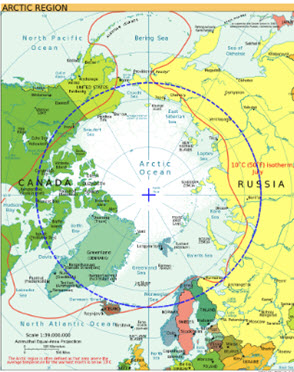
British sovereignty over the Arctic Islands passed to Canada.
Arctic sovereignty is a key part of Canada’s history and future — 40 per cent of the country’s landmass is in its three northern territories, and the country has 162,000 kilometers of Arctic coastline
Text and image © The Canadian Encyclopedia
|
| 24 | 1881 | - 4 Mar 1881—19 Sep 1881: James A. Garfield - 20th US President

James Abram Garfield (November 19, 1831 – September 19, 1881) was the 20th president of the United States, serving from March 4, 1881 until his death by assassination six and a half months later.
Garfield was shot by Charles J. Guiteau, a disgruntled office seeker, at the Baltimore and Potomac Railroad Station in Washington, DC on July 2, 1881. After eleven weeks of intensive and other care Garfield died in Elberon, New Jersey, the second of four presidents to be assassinated, following Abraham Lincoln.
- 6 Aug 1881: Sir Alexander Fleming born

Sir Alexander Fleming (6 August 1881 – 11 March 1955) was a Scottish physician, microbiologist, and pharmacologist. His best-known discoveries are the enzyme lysozyme in 1923 and the world's first antibiotic substance benzylpenicillin (Penicillin G) from the mould Penicillium notatum in 1928, for which he shared the Nobel Prize in Physiology or Medicine in 1945 with Howard Florey and Ernst Boris Chain. He wrote many articles on bacteriology, immunology, and chemotherapy.
- 19 Sep 1881—3 Mar 1885: Chester A Arthur - 21st US President

Chester Alan Arthur (October 5, 1829 – November 18, 1886) was an American attorney and politician who served as the 21st president of the United States from 1881 to 1885; he was the 20th vice president of the United States and became president upon the death (assassination) of President James Garfield in September 1881.
Arthur arrived in Washington, D.C. on September 21. On September 22, he re-took the oath of office, this time before Chief Justice Morrison R. Waite. Arthur took this step to ensure procedural compliance; there had been a lingering question about whether a state court judge (Brady) could administer a federal oath of office. He initially took up residence at the home of Senator John P. Jones, while White House remodeling he ordered was carried out, including the addition of an elaborate fifty-foot glass screen made by Louis Comfort Tiffany, which remained in a White House corridor until it was dismantled in 1902.
|