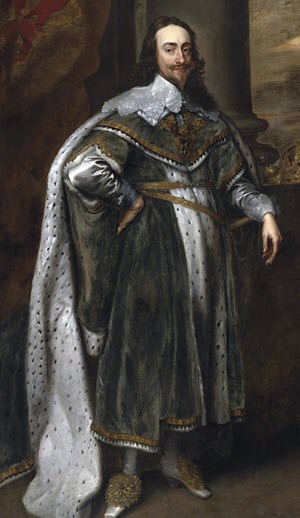
Charles I was king of England, Scotland and Ireland, whose conflicts with parliament led to civil war and his eventual execution.
Charles's reign was plagued with tensions with parliament over money - made worse by the costs of war abroad. In addition, Charles favoured a High Anglican form of worship, and his wife was Catholic - both made many of his subjects suspicious, particularly the Puritans. In November 1641, tensions were raised even further with disagreements over who should command an army to suppress an uprising in Ireland. Charles attempted to have five members of parliament arrested and in August 1642, raised the royal standard at Nottingham. Civil war began.
The Royalists were defeated by the Scots and the formation of the New Model Army. Convinced that there would never be peace while the king lived, a rump of radical MPs, including Cromwell, put him on trial for treason. He was found guilty and executed on 30 January 1649 outside the Banqueting House on Whitehall, London.



 1633 - 1633 (0 years)